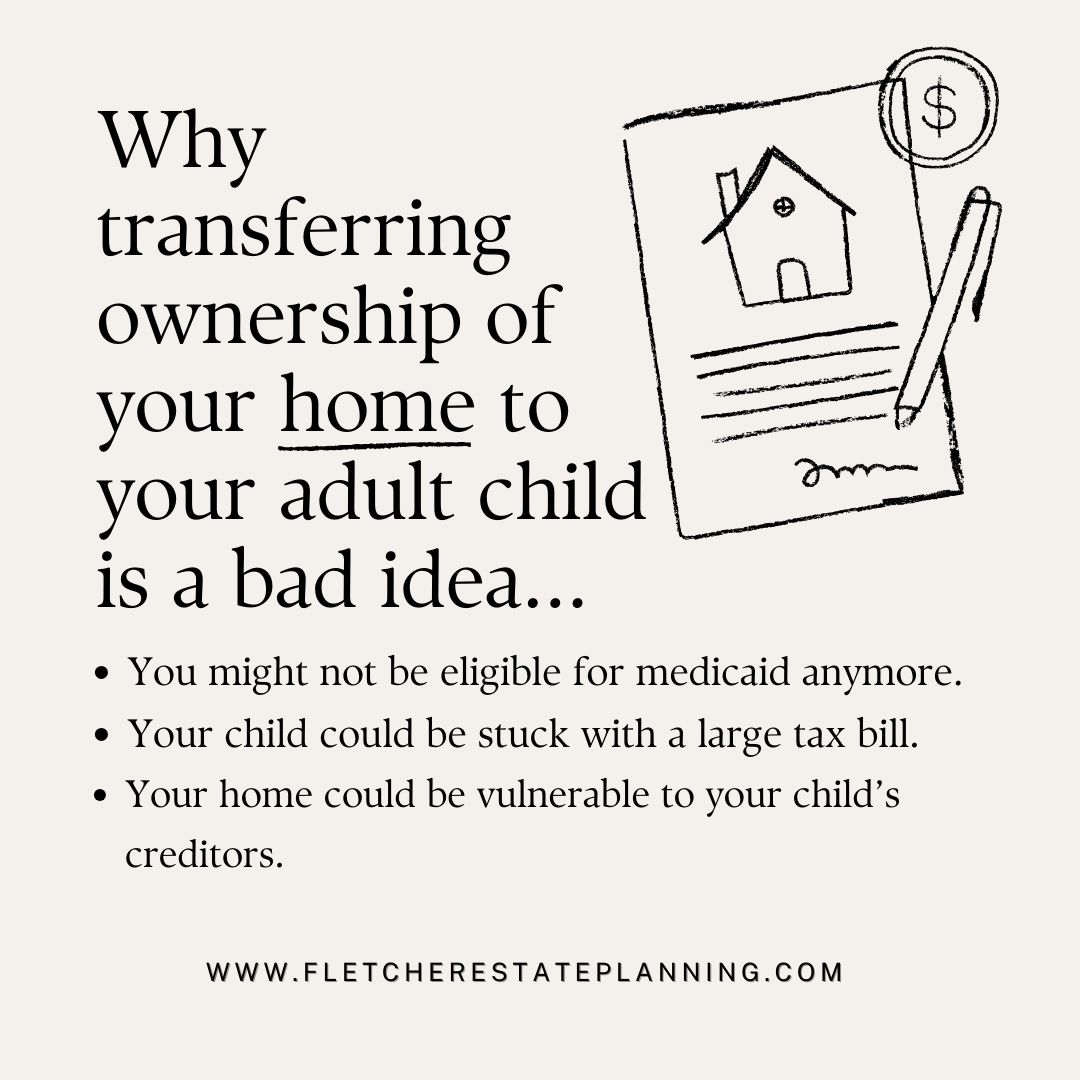
Many parents consider transferring ownership of their home to an adult child as part of estate planning. The idea sounds simple and well intentioned. Avoid probate, protect assets, and make things easier for the family. Unfortunately, this strategy often creates more problems than it solves.
You could lose Medicaid eligibility
One of the biggest risks involves Medicaid. Transferring your home to a child can trigger Medicaid penalty rules. Medicaid looks back several years at asset transfers, and giving away your home may disqualify you from benefits when you need them most. This can leave families facing expensive long term care costs with limited options.
Your child may face a significant tax bill
When you transfer your home during your lifetime, your child usually receives your original tax basis. If they later sell the home, they could owe substantial capital gains taxes. In contrast, homes inherited after death often receive a step up in basis, which can dramatically reduce or eliminate taxes. What feels like a gift today may become a financial burden later.
Your home becomes exposed to your child’s risks
Once your child owns the home, it is no longer protected from their financial life. Divorce, lawsuits, bankruptcy, or creditor claims against your child could put the home at risk. Even a well meaning child can face circumstances beyond their control.
You lose control and flexibility
Transferring ownership means giving up legal control. If you later need to sell, refinance, or move, you may need your child’s approval. This loss of flexibility can create tension and limit your options as your needs change.
There are better estate planning solutions
Wills, trusts, and properly structured Medicaid planning can often achieve your goals without exposing your home to unnecessary risks. An experienced estate planning attorney can help you protect your assets, maintain control, and reduce taxes while planning for the future.
Before transferring your home to an adult child, it is essential to understand the legal and financial consequences. What seems like a simple solution can have lasting effects on both you and your family.